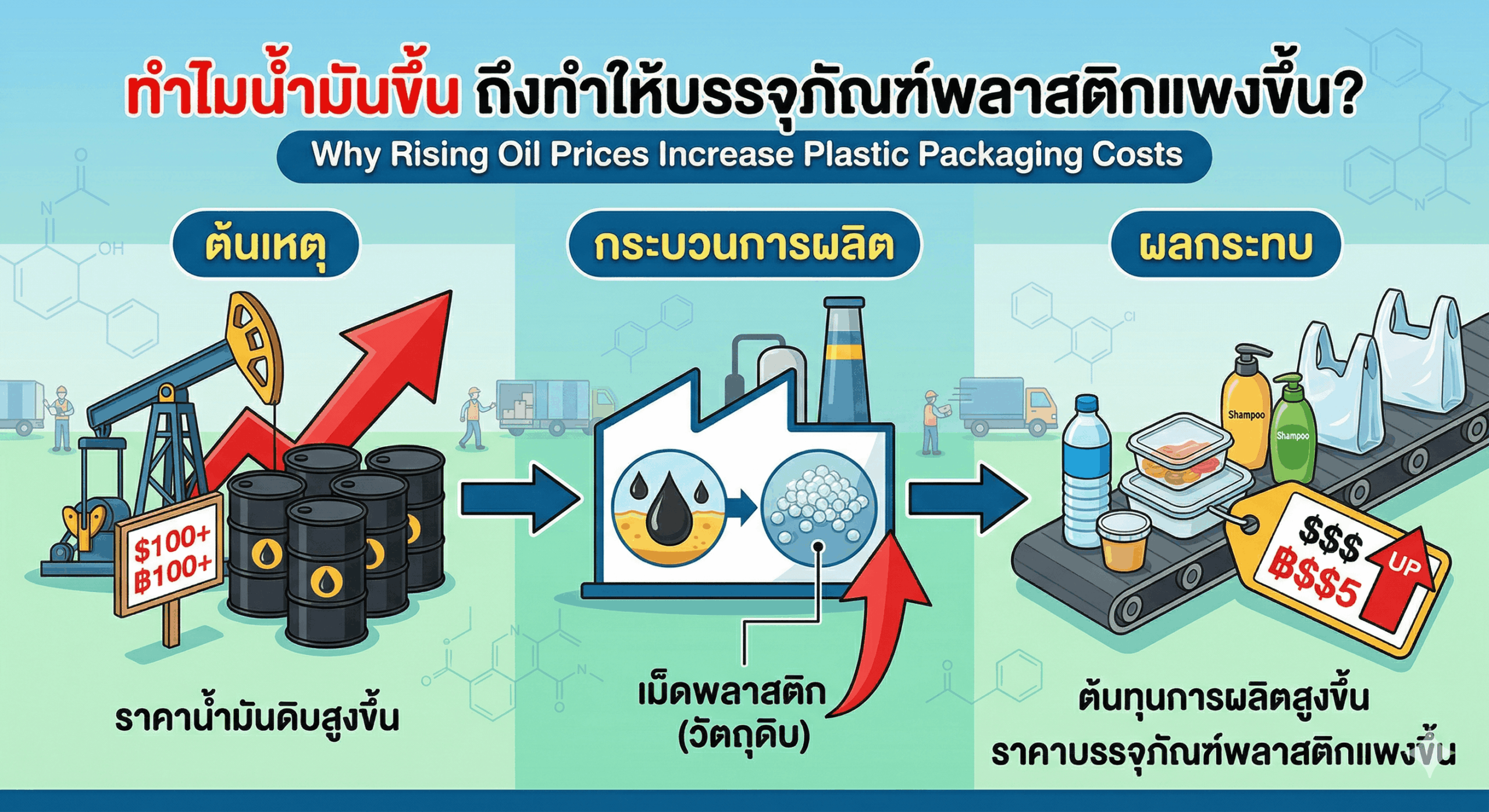
Many people have noticed that whenever news of rising global oil prices breaks, it isn’t long before the price of food boxes, bags, and containers starts climbing too. But why do oil prices have such a direct impact on plastic packaging? This article will walk you through the chain that connects an oil well in the Middle East to the container in your customer’s hands.
Is Plastic Really Made From Oil?
The answer is yes — the primary raw material for most plastics is a product derived from refining crude oil. In particular, a substance called Naphtha, which is the key feedstock used to produce various types of plastic resin used throughout the packaging industry.
The most common plastics used in food packaging include:
- PP (Polypropylene) — rice boxes, cup lids, food trays
- PE (Polyethylene) — plastic bags, wrapping film
- PET (Polyethylene Terephthalate) — water bottles, salad containers
- PS (Polystyrene) — foam food containers, coffee cups
All of these contain crude oil as a core ingredient. When oil prices change, plastic production costs are directly affected.
How Does the Oil-to-Plastic Chain Work?
Think of the production chain in 4 steps:
- Step 1 — Oil Refinery
- Crude oil is refined and separated into various products, including naphtha — the primary feedstock for the petrochemical industry. When crude oil prices rise, naphtha prices rise in direct proportion.
- Step 2 — Petrochemical Plant
- Naphtha is fed through a Steam Cracking process to separate it into basic chemicals such as ethylene and propylene — the essential building blocks for creating various polymers. Energy costs in this process also rise in line with oil prices.
- Step 3 — Plastic Resin Plant
- The chemicals from Step 2 are processed into various types of plastic resin pellets (Resin/Pellet). Plastic resin prices in the global market therefore closely track crude oil prices.
- Step 4 — Packaging Manufacturer
- Plastic resin pellets are formed into finished packaging — whether boxes, bags, or containers. When raw material costs rise from the upstream, prices downstream must adjust upward as well.
Oil Isn’t the Only Factor — What Else Drives Up Plastic Prices?
Something important to understand is that oil prices are just one of several factors that determine plastic packaging costs. In reality, there are other contributing factors as well:
- International Shipping and Logistics Costs
- Cargo ships and trucks run on fuel derived from oil, so when oil prices rise, freight and transport costs rise too. Compounded by uncertainty in international shipping routes, this can significantly raise the total landed cost of imported packaging.
- Exchange Rate (USD/THB)
- Most plastic resin is traded in US dollars. When the Thai Baht weakens, the cost of importing raw materials rises automatically — even if global oil prices remain stable.
- Global Market Demand
- During periods of surging packaging demand — such as after COVID-19 or during peak seasons — plastic resin prices may rise due to demand outstripping supply, even when oil prices haven’t increased significantly.
Factory Energy Costs
Plastic manufacturing is highly energy-intensive, requiring large amounts of electricity and natural gas — both of which tend to be priced in relation to oil. So even when crude oil prices dip slightly, if energy costs in manufacturing countries remain high, packaging prices may not come down accordingly.
How Does This Affect SMEs and Food Businesses?
For business operators where packaging is a significant part of monthly costs, the key thing to be aware of is that packaging prices typically lag oil prices by approximately 3–6 months, because the production cycle and existing inventory must be depleted first. This means that even if oil prices rise today, the impact on your packaging purchase price may not arrive for several months.
Furthermore, for small businesses without strong bargaining power, raw material price changes are often passed through in full — with no absorption by the supplier — unlike large brands that have long-term price-locked contracts.
How to Manage When Packaging Costs Rise?
Even though global factors are beyond your control, there are still things business owners can do to manage costs more effectively:
- Plan Procurement in Advance
- Monitor oil and plastic resin price trends in the market. If there are signals that prices will rise, stocking an appropriate quantity of packaging in advance may help save on costs.
- Consider Alternative Materials
- There are currently many alternative packaging options available — such as paper, bagasse, or bio-based plastics — that may have less price volatility than petroleum-based plastics in certain periods.
- Consult a Trusted Supplier
- Having a partner who provides transparent market information and helps plan your packaging in line with your business costs is one of the most effective ways to manage price volatility.
If you’re looking for packaging solutions that fit your business and budget, our team is ready to help. Contact us today.