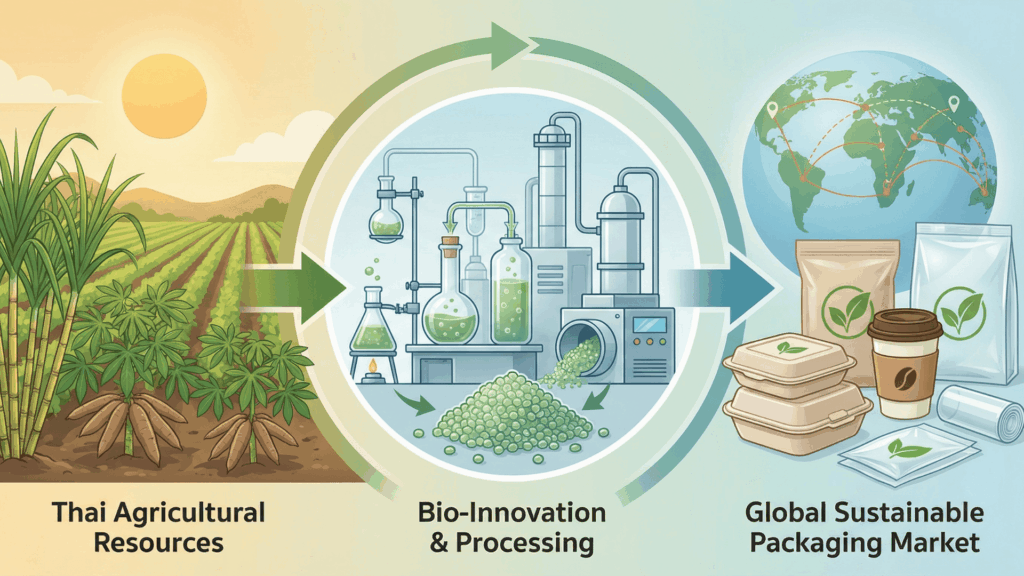
Over the past few years, the words “bioplastics” and “sustainable packaging” have appeared with increasing frequency in business reports, investor presentations, and government policy. Thailand is no exception to this trend — but the more important question is: where does Thailand actually stand, and how real is the opportunity?
This article breaks down what bioplastics actually are, why Thailand is seen as a potential player, and what limitations businesses need to be aware of before making packaging decisions.
What Are Bioplastics — And Don’t Confuse Them with Biodegradable
Bioplastics, or bio-based plastics, are plastics produced from biomass feedstocks — such as cassava starch, sugarcane, corn, or algae — rather than petroleum.
But here’s a critical distinction that many businesses miss: bioplastics do not always mean biodegradable. They fall into two main categories:
- Bio-based but non-biodegradable
- Such as bio-PET or bio-PE — these behave exactly like conventional plastics in every way; the only difference is that the raw material comes from plants rather than oil.
- Bio-based and biodegradable
- Such as PLA (Polylactic Acid) or PHA (Polyhydroxyalkanoates) — these can break down, but typically require specific conditions such as industrial composting at elevated temperatures, not just a regular trash bin.
Understanding this distinction is critical for any business considering a switch to bioplastics, because it determines what kind of waste management infrastructure you need to make any real environmental impact.
Why Thailand Is on the Industry’s Radar
Thailand has several structural advantages that analysts and investors point to when discussing bioplastics potential:
- Strong Biomass Feedstock Base
- Thailand is one of the world’s largest producers and exporters of cassava and sugarcane, both of which are primary feedstocks for various types of bioplastics including PLA.
- Supportive Government Policy
- Thailand’s Board of Investment (BOI) has concrete incentives for bioplastics manufacturing investment, and the Thailand Plastics Roadmap sets targets for reducing plastic waste and promoting domestic bioplastics production.
- Strategic ASEAN Location
- Situated at the center of ASEAN’s market of over 600 million consumers, with a steadily growing food & beverage industry that creates rising demand for sustainable packaging across the region.
Where Thailand Stands Today
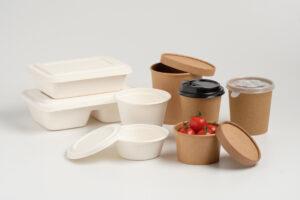
There is already a small but growing base of commercial-scale bioplastics producers in Thailand, particularly in PLA and cassava starch-based biodegradable packaging. Several companies have begun offering bio-based products to domestic and international customers.
That said, the market is still in early stages. Production volumes are not yet sufficient to compete on price with conventional plastics across the board, and the composting infrastructure needed to properly manage biodegradable packaging at scale is not yet widely available in the country.
Opportunities vs. Limitations — An Honest Look
Opportunities worth watching:
- Demand from Global Brands
- Growing demand for sustainable packaging from global brands with manufacturing bases in Thailand.
- Foreign Investment Interest
- Foreign investors are increasingly interested in setting up bioplastics production facilities in Thailand.
- European Export Markets
- Sustainability regulations in Europe are becoming stricter, opening doors for Thai producers who are ready to meet those standards.
- Brand Positioning
- Real opportunities exist for businesses that genuinely prioritize environmental responsibility to differentiate themselves in the market.
Limitations to watch:
- Higher Cost
- Bioplastics typically cost 2–4x more than conventional plastics, depending on type and volume.
- Performance Trade-offs
- Some bioplastics have lower heat or moisture resistance than conventional alternatives, making them unsuitable for certain packaging applications.
- Waste Management Gap
- Even PLA that can biodegrade will behave like conventional plastic if it ends up in a landfill rather than a composting facility.
- Consumer Confusion
- Many end-users still don’t understand the differences between bioplastic types, which can undermine the intended environmental messaging.
How Should Businesses Approach This?
For business owners and procurement teams considering sustainable packaging, there are a few important questions to ask before making any decisions:
- Ask the Right Question First
- What does your product actually need from its packaging? And how will your customers dispose of it? These answers determine which — if any — bioplastic makes sense for you.
- Don’t Decide Based on Buzzwords
- “Eco-friendly” doesn’t automatically mean best-in-class. Look at the full lifecycle of the packaging material before committing.
- Work with Suppliers Who Have Real Data
- A good supplier should be able to tell you which material genuinely fits your application — not just sell you on the trend.
Thailand has real strengths as a potential bioplastics player — feedstock, policy support, and geography all point in the right direction. But there is still a significant distance to travel before becoming a full-scale global hub. For businesses today, the most valuable thing is understanding what bioplastics actually are, and making choices based on evidence — not just momentum.
If you’re looking for packaging solutions that balance cost, functionality, and your business’s sustainability direction, our team is ready to help. Contact us today.