What Is Vacuum Packaging — and How Does It Work?
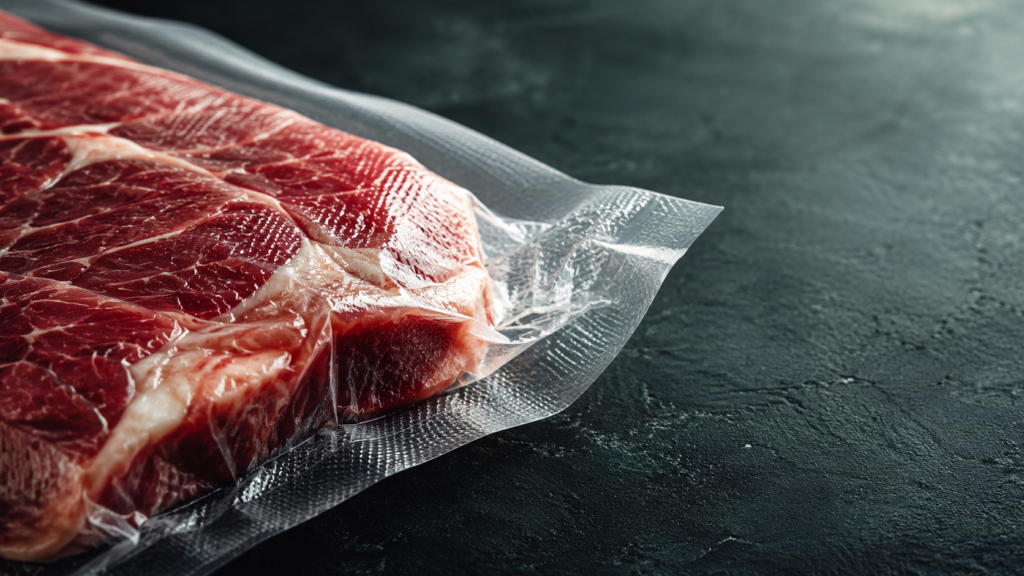
Vacuum packaging is the process of removing air from a package before sealing it, reducing the oxygen level inside to as low as possible. This matters because oxygen is one of the primary drivers of food spoilage — accelerating the growth of aerobic bacteria, the oxidation of fats, and the discoloration of meat and other products.
By removing air, vacuum packaging typically reduces internal oxygen levels from the 21% found in ambient air to below 1%. The result is a shelf life that is commonly 3–5 times longer than conventionally packaged equivalents, depending on the food type and storage temperature.
How Does Vacuum Packaging Compare to Other Technologies?
Many food businesses are uncertain about the difference between vacuum packaging and related technologies. Here’s a practical comparison.
Vacuum Packaging vs. Modified Atmosphere Packaging (MAP)
MAP does not remove all air but replaces it with a specific gas mixture — for example, adding CO₂ to inhibit mold, or N₂ to maintain product shape. Vacuum packaging is better suited to firm, dense products, while MAP is preferred for fresh meat, produce, and products where appearance and structure need to be maintained.
Vacuum Packaging vs. Aseptic Packaging
Aseptic packaging uses high-heat sterilization before filling, making the product shelf-stable at room temperature without refrigeration. Vacuum packaging does not sterilize the product — it requires refrigeration or freezing to achieve its full shelf life benefit.
Vacuum Packaging vs. Standard Heat Sealing
Ordinary heat sealing closes the bag opening but leaves the air inside. Vacuum packaging removes that air before sealing — a fundamental difference that directly determines shelf life extension.
Which Food Products Benefit Most?
Vacuum packaging works across a wide range of products, but delivers the greatest benefit in the following categories.
Meat and Seafood
This is where vacuum packaging has the most significant impact. Chilled beef can extend from 3–5 days to 3–4 weeks. Frozen meat can extend from around 6 months to over a year under standard freezing conditions of -18°C.
Cheese and Dairy
Hard to semi-hard cheeses can be stored refrigerated for 4–8 months with vacuum packaging, compared to 1–2 weeks with standard wrapping.
Nuts and Grains
Reduces fat oxidation (preventing rancidity), blocks moisture ingress, and prevents insect contamination. Ideal for long-term ingredient storage.
Processed and Ready-to-Eat Foods
Products such as sausages, cured meats, and chilled prepared meals can significantly extend shelf life without the need for additional preservatives — a strong clean-label advantage.
Coffee and Tea
Prevents flavor and aroma loss caused by oxygen and moisture exposure during storage and transit.
Which Food Products Are Not Suitable?
Vacuum packaging is not universal. There are product categories where it is inappropriate or counterproductive.
- Fresh fruits and vegetables — Still respiring after harvest. Removing oxygen can damage cells and accelerate deterioration. MAP is a better choice here.
- Delicate or crushable products — Bread, cakes, crisps, and similar items can be deformed or crushed under the pressure of vacuum sealing.
- Soft ripening cheeses — Blue cheese and similar varieties require oxygen for the aging process. Vacuum sealing would halt maturation.
- High-liquid products — Liquid can be drawn out during the vacuuming process, damaging the seal or the machine. Pre-freezing the product before sealing is typically required.
Choosing the Right Bags and Equipment for Your Business
The packaging material directly affects performance. Effective vacuum bags require high oxygen barrier properties, typically achieved through multilayer film structures such as PA/PE (Nylon/Polyethylene) or EVOH/PE, with a low Oxygen Transmission Rate (OTR).
For equipment, there are two main types suited to different business scales.
- External vacuum sealers — Lower entry cost, suitable for small-scale operations and restaurant kitchens. Less consistent suction and limited capability with liquid-rich products.
- Chamber vacuum sealers — Vacuum is applied to a sealed chamber rather than the bag opening, producing more uniform results and handling liquids far more effectively. Better suited to production environments and higher-volume operations. Higher upfront cost, but clearly superior performance.
Is Vacuum Packaging Worth the Investment for Your Business?
Vacuum packaging delivers one of the clearest ROI cases in food packaging technology — particularly for businesses handling high-value ingredients such as meat, seafood, or premium processed products where shelf life extension directly reduces food waste and opens up longer distribution windows.
The key to getting results lies in matching the right barrier material to the product, and selecting equipment that provides sufficient, consistent vacuum. If you’re unsure whether vacuum packaging is the right fit, or whether another technology would better serve your product profile, speaking with a packaging specialist is the most cost-effective first step.